
Age-by-Age Chore Guide: What's Reasonable at 7, 10, and 13
Most chore arguments are not really about the chore. They start because a parent expected something the kid was never set up to deliver, or because a kid got handed a job they outgrew two years ago and knew it.

Choosing age appropriate chores for kids is not about finding the official list for each birthday. It is about calibrating three things: how much you hand over, how much you still check, and what standard you will actually accept. Get those right and the chore sticks. Get them wrong and you are back to nagging by Wednesday.
This is the expectation side of the problem. If what you want is the raw list of what to assign, the chore chart guide for ages 7 to 13 covers that.
A three-question test for any chore
Run any new job past these three before you assign it. A "no" does not mean the chore is wrong for your kid. It means it needs a smaller version.
- 1
Can they do it without your hands?
If one step needs your height, your strength, or your knife, that step is yours. The rest can still be theirs.
- 2
Can they remember it without you?
A job that only happens when you say so is not theirs yet. Shrink it, or pin it to something already fixed in their day.
- 3
Can you live with their version of done?
A 7 year old makes a lumpy bed. If you plan to redo it behind them, lower the bar or pick a different chore.
Ages 7, 10, and 13 at a glance
Same three ages, side by side. Notice that the biggest change from column to column is not the difficulty of the work. It is how much of the remembering and checking has moved off your plate.
Age 7
- One or two chores, same time every day
- You check every time, cheerfully
- Owns: their bed, their toys, the pet bowl
- Skip: anything with a deadline they must track
Age 10
- Three or four chores across the week
- You check the result, not the process
- Owns: their laundry, a shared room, the bins
- Skip: jobs where a mistake costs real money
Age 13
- A standing weekly share of the household load
- You stop checking unless it gets missed
- Owns: one meal, their whole room, a sibling handoff
- Skip: nothing, but let them pick the schedule
At 7: one job, same time every day
Seven is the age where the point of a chore is the habit, not the help. A 7 year old who does one job a day at a fixed time is worth more to the household than one who does five on Saturday and nothing all week.
Pick something visible and attached to a moment that already exists. Bed after breakfast. Pet fed before school. Toys off the floor before a screen goes on. Feeding the pet is a particularly good first chore because the pet notices, and the feedback does not have to come from you.
Two things to expect at this age. Their standard will be worse than yours, and they will need reminding for weeks before it sticks. Neither one is a discipline problem. If you catch yourself redoing the job the second they walk away, that is the signal to swap it for one where "good enough" genuinely is.
At 10: the handover years
Ten is where most families quietly stall. The kid can physically manage almost anything by now, so parents keep adding chores, and the thing that has not caught up is doing them without a prompt.
So the shift at 10 is not more work. It is transferring the tracking. "Go empty the dishwasher" becomes "the dishwasher is yours after dinner," and then you stop announcing it. Some evenings it will not get done. That is the actual lesson of this age, and it only lands if you let it sit there instead of quietly doing it yourself at 10pm.
Ten is also the age to hand over a chore that has nothing to do with their own stuff. Tidying their room is self-interest. Taking the bins out on the right night, or folding the family's towels, is the first job that exists purely because they live with other people.
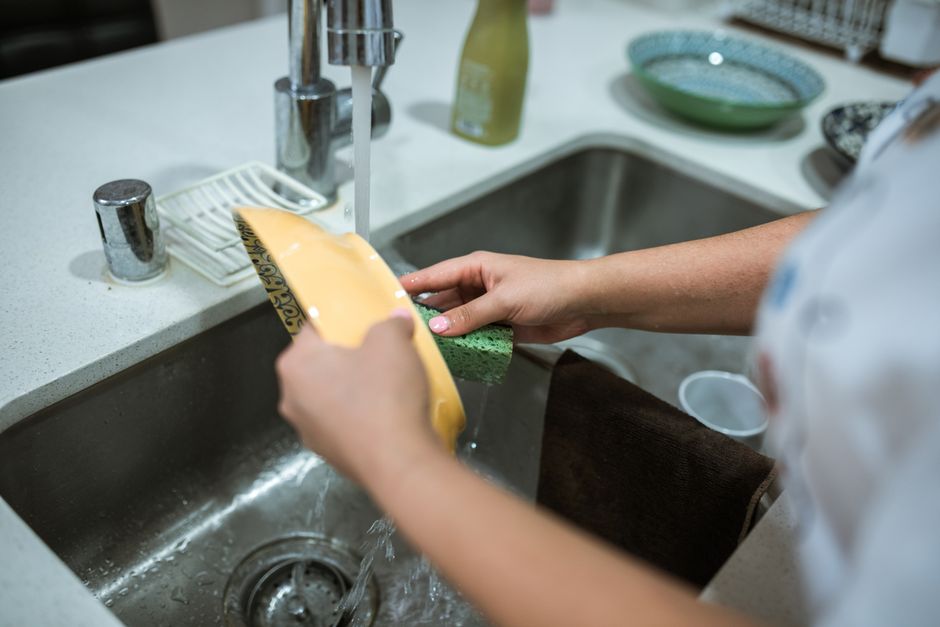
At 13: they own it, you stop watching
By 13, inspecting the work is the thing that starts the fight. A 13 year old told the bathroom needs redoing hears an inspection. The same kid, handed the bathroom as theirs with nobody hovering, usually does a passable job and gets irritated if you touch it.
Reasonable at 13 looks like a real share of the load rather than a checklist: one dinner a week they plan and cook, their own laundry from hamper to drawer, their room on their own schedule even when that schedule is "Sunday night, badly." Negotiating when it happens is fine and worth doing. Negotiating whether it happens is not.
What motivates them changes too. Stickers stopped working years ago. Money, screen time, a lift somewhere, and being trusted with something new all still work.
The most useful question at every age is not what can they do. It is what can you stop checking.
The two ways this usually goes wrong
- Too much, too fast. A kid who has been doing one chore gets handed five after a rough week, and by day four the whole system is dead. Add one at a time and let it stick before the next.
- Too little, for too long. A 12 year old still on "put your shoes away" is not being spared. Older kids read an easy chore list as a verdict on what you think they are capable of.
Siblings at different ages, one kitchen
Two kids three years apart should not have the same list, and they will spot the difference within a day. The version that survives is when the older kid's extra work comes with something the younger one does not get: a later bedtime, more say in the rewards, a better rate per chore.
Saying it out loud helps more than you would expect. "You get the harder jobs and the bigger payoff, and your brother gets both when he is your age" is an argument a 12 year old can actually accept.
How to raise the bar without a fight
- Name the promotion. Say the chore is changing and why, instead of silently expecting more.
- Hand over the tracking before you hand over more work. Go a full week without reminding before you add anything.
- Raise the payoff along with the bar. A bigger job at last year's rate reads as a demotion.
- Give it three weeks before you judge it. New chores fail in week one for reasons that have nothing to do with whether they were age appropriate.
If you are running this in a task app for kids like TaskiKids, each child has their own task list and their own point values, so a 7 year old's three-point bed and a 13 year old's twenty-point dinner can sit side by side without either feeling shortchanged. Routine daily jobs can be set to auto-approve so you are not signing off on a made bed every morning, and the ones you do want eyes on stay in the approval queue.
Frequently asked questions
What chores are age appropriate for a 7 year old?
One or two simple jobs at the same time each day: making the bed, feeding a pet, setting the table, putting toys away, wiping the bathroom sink. Expect to remind them for several weeks, and expect their idea of "done" to be looser than yours.
How many chores should a 10 year old have?
Three or four across the week is a reasonable load at 10. The bigger change at this age is not the number of chores, it is that you stop prompting each one and let your kid do the remembering.
Should a 13 year old do chores every day?
Daily matters less at 13 than a fixed share of the household load. One cooked meal a week, their own laundry, and their own room tends to work better than a daily checklist, and letting them choose the timing removes most of the friction.
What if my child refuses to do their chores?
Check the calibration first. Refusal usually means the job is too big, too vague, or has no visible payoff, and all three are fixable. If the chore really is reasonable, what changes behavior is a consequence you are willing to repeat every time, not a longer conversation.
Keep reading

The Ultimate Chore Chart Guide for Kids Ages 7-13
Age-by-age chore ideas for kids 7-13, why paper charts stop working around age 9, and how a simple points system keeps kids motivated without nagging.

Best Reward Systems for Kids' Chores (2026)
Compare allowance, points, and privilege reward systems for kids' chores, plus a worked example of how to price tasks and rewards in points.
10 Ways to Motivate Kids to Do Chores Without Nagging
Practical, non-nagging ways to get kids doing chores on their own, from timing and framing to letting natural consequences do the work.

Allowance vs. Reward Points: What Actually Works
Should you pay kids cash or run a points system? What each one is genuinely good at, the hybrid most families land on, and where a kids allowance app fits.